If you’re building software in today’s fast-paced world, Azure DevOps isn’t just a tool—it’s your ultimate game-changer. From seamless CI/CD pipelines to robust project management, discover how this powerhouse platform transforms development workflows with precision, speed, and scalability.
What Is Azure DevOps and Why It Matters

Azure DevOps is Microsoft’s comprehensive suite of development tools designed to support the entire software development lifecycle. Whether you’re a solo developer or part of a large enterprise team, Azure DevOps provides integrated services that streamline planning, coding, testing, and deployment—all in one unified environment. Its cloud-native architecture ensures accessibility, reliability, and scalability across global teams.
Core Components of Azure DevOps
The platform is built around five key services, each addressing a specific phase of the development lifecycle. These components work seamlessly together but can also be used independently depending on your team’s needs.
- Azure Repos: Git repositories or Team Foundation Version Control (TFVC) for source code management with enterprise-grade security and collaboration features.
- Azure Pipelines: A powerful CI/CD service that automates building, testing, and deploying applications across multiple platforms and clouds.
- Azure Boards: Agile project management tools including backlogs, boards, and dashboards for tracking work items and sprint progress.
- Azure Test Plans: Comprehensive manual and exploratory testing tools to ensure software quality before release.
- Azure Artifacts: Package management service that allows teams to share Maven, npm, NuGet, and Python packages across projects.
Each component integrates smoothly with others, enabling end-to-end traceability from idea to deployment. This integration reduces toolchain fragmentation, which is a common pain point in modern DevOps environments.
How Azure DevOps Differs from Traditional Development Tools
Unlike legacy systems that silo development, testing, and operations, Azure DevOps fosters a culture of collaboration and automation. Traditional tools often require stitching together disparate systems—like Jira for tracking, Jenkins for CI, and Nexus for packages—leading to integration overhead and visibility gaps.
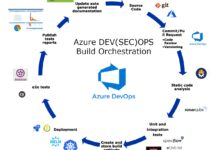
In contrast, Azure DevOps offers a native, cohesive experience. For example, when a developer pushes code to Azure Repos, it automatically triggers a pipeline in Azure Pipelines, updates work items in Azure Boards, and stores built artifacts in Azure Artifacts—all without third-party plugins or complex scripting.
“Azure DevOps bridges the gap between development and operations by providing a single platform where code, process, and automation converge.” — Microsoft Developer Documentation
This unified approach significantly reduces mean time to resolution (MTTR), improves deployment frequency, and enhances overall software quality—key metrics tracked in the State of DevOps Reports.
Azure DevOps vs. Competitors: A Strategic Comparison
While several DevOps platforms exist—such as GitHub Actions, GitLab CI/CD, Jenkins, and AWS CodeStar—Azure DevOps stands out due to its deep integration with Microsoft’s ecosystem, enterprise scalability, and hybrid deployment capabilities.
Comparison with GitHub Actions
GitHub Actions and Azure DevOps share many similarities, especially since both are owned by Microsoft. However, their use cases differ. GitHub Actions excels in open-source projects and lightweight automation directly within GitHub repositories. It’s ideal for developers who want to trigger workflows on pull requests or issue creation.
Azure DevOps, on the other hand, is built for enterprise-scale application delivery. It offers advanced features like portfolio backlogs, release gates, multi-stage deployments, and compliance tracking—features often missing or limited in GitHub Actions. Additionally, Azure DevOps supports private agents, on-premises deployments, and integration with Azure Active Directory for enhanced security.
For organizations already using Microsoft tools like Visual Studio, Azure, or Office 365, Azure DevOps provides a more seamless experience than GitHub Actions, which may require additional configuration for enterprise identity and access management.
Advantages Over Jenkins and GitLab
Jenkins, while highly customizable, requires significant maintenance. Setting up Jenkins involves managing servers, plugins, security patches, and scaling infrastructure—tasks that divert developer focus from actual coding.
Azure DevOps eliminates most of these operational burdens with its fully managed services. There’s no need to maintain build agents unless you require specialized environments (e.g., Windows-based builds). Even then, Microsoft provides hosted agents with pre-installed tools and runtimes.
GitLab offers a similar all-in-one platform but lacks native integration with Microsoft technologies. For teams heavily invested in .NET, SQL Server, or Azure services, Azure DevOps provides superior tooling and performance. Moreover, Azure DevOps supports hybrid scenarios where some components run on-premises (via Azure DevOps Server) while others remain in the cloud.
According to a Gartner Magic Quadrant report, Azure DevOps ranks highly for completeness of vision and ability to execute, particularly in regulated industries like finance and healthcare.
Setting Up Your First Azure DevOps Project
Getting started with Azure DevOps is straightforward, even for beginners. The platform offers a free tier for small teams (up to five users), making it accessible for startups and individual developers.
Step-by-Step Project Creation
To begin, visit dev.azure.com and sign in with your Microsoft account. Once logged in, click “New Organization” to create a new workspace. This organization acts as a container for all your projects.
After creating the organization, select “New Project” and provide a name, description, and visibility setting (public or private). You can choose to initialize the project with a README file or start empty. During setup, you’ll also select a version control system—Git or TFVC—and a work item process (Agile, Scrum, or CMMI).
The choice of process template affects the structure of work items in Azure Boards. Agile is best for teams using Kanban or Scrum practices, while CMMI suits highly regulated environments requiring detailed documentation and traceability.
Configuring User Access and Permissions
Security is critical in any development environment. Azure DevOps uses role-based access control (RBAC) to manage permissions at the organization, project, and team levels.
When adding users, you can assign them to built-in groups like Project Administrators, Developers, or Stakeholders. Each group has predefined permissions. For example, Stakeholders can view work items and dashboards but cannot modify code or pipelines.
You can also create custom security groups for finer control. For instance, a “Release Managers” group might have permission to approve production deployments but not edit source code. Permissions can be set using the Security tab under Project Settings.
Integration with Azure Active Directory (Azure AD) enables single sign-on (SSO), multi-factor authentication (MFA), and conditional access policies—essential for enterprise compliance.
Mastering Azure Repos: Version Control Done Right
Azure Repos is the backbone of source code management in Azure DevOps. It supports both Git and TFVC, though Git is recommended for most modern workflows due to its distributed nature and branching flexibility.
Best Practices for Git Workflow in Azure Repos
Effective use of Git in Azure DevOps involves adopting a consistent branching strategy. The most popular is GitFlow, but many teams now prefer Trunk-Based Development for faster CI/CD cycles.
In Azure Repos, you can enforce branch policies to maintain code quality. For example, you can require pull requests (PRs) before merging into main branches, set minimum reviewer counts, and mandate linked work items. These policies prevent unauthorized changes and ensure traceability.
You can also integrate static code analysis tools like SonarQube or ESLint into your PR validation pipeline. When enabled, any new code must pass these checks before it can be merged—helping catch bugs early.
Another powerful feature is branch-specific build triggers. For instance, commits to the ‘develop’ branch might trigger a CI build, while changes to ‘release/*’ branches trigger a CD pipeline to staging environments.
Securing Code with Branch Policies and PR Reviews
Security starts in the repository. Azure Repos allows you to define branch policies that enforce mandatory code reviews, status checks, and merge strategies.
For example, you can configure the main branch to require at least two approvals from team members, with at least one approver being a senior developer. You can also block merges if automated tests fail or if code coverage drops below a threshold.
Pull request comments are threaded and persistent, allowing asynchronous discussions. Reviewers can request changes, leave suggestions, or approve the PR. Once approved, the PR can be completed automatically using squash merge, rebase, or fast-forward strategies.
These controls align with DevSecOps principles by embedding security checks directly into the development workflow, reducing the risk of vulnerabilities making it to production.
Automating Workflows with Azure Pipelines
Azure Pipelines is arguably the most powerful component of Azure DevOps. It enables continuous integration and continuous delivery (CI/CD) for virtually any application type—web, mobile, microservices, or legacy systems.
Creating Your First CI Pipeline
To create a CI pipeline, navigate to the Pipelines section and click “New Pipeline.” You can connect to code stored in Azure Repos, GitHub, Bitbucket, or even external Git repositories.
The wizard guides you through selecting a source, repository, and branch. Then, you choose a template—such as ASP.NET, Node.js, Python, or Docker—that generates a starter YAML configuration. This YAML file defines the steps Azure Pipelines will execute whenever new code is pushed.
For example, a basic Node.js CI pipeline might include steps to restore dependencies, run unit tests, and publish test results. Here’s a sample snippet:
trigger:
  - main

pool:
  vmImage: 'ubuntu-latest'

steps:
- task: NodeTool@0
  inputs:
    versionSpec: '16.x'
  displayName: 'Install Node.js'

- script: npm install
  displayName: 'npm install'

- script: npm test
  displayName: 'npm test'
  continueOnError: true

- task: PublishTestResults@2
  condition: succeededOrFailed()
  inputs:
    testResultsFiles: '**/test-results.xml'
    testRunTitle: 'Node.js Tests'
This pipeline runs on every push to the main branch, ensuring that code is tested automatically. Failed tests block deployment, enforcing quality gates.
Building Multi-Stage CD Pipelines
While CI ensures code is always in a releasable state, CD automates the deployment process across environments. Azure Pipelines supports multi-stage pipelines defined entirely in YAML.
A typical CD pipeline includes stages for Dev, QA, Staging, and Production. Each stage can have pre-deployment approvals, automated tests, and post-deployment validations.
For example, deploying to Production might require manual approval from a release manager and a successful canary test in a shadow environment. You can also use deployment strategies like blue-green or rolling updates to minimize downtime.
Environment-specific variables and secrets (like database connection strings) are stored securely in pipeline variables or Azure Key Vault, ensuring sensitive data isn’t exposed in code.
According to Microsoft’s official documentation, organizations using multi-stage pipelines report up to 50% faster release cycles and 70% fewer production incidents.
Enhancing Collaboration with Azure Boards
Development isn’t just about code—it’s about people, processes, and communication. Azure Boards brings agile project management into the heart of Azure DevOps, enabling teams to plan, track, and discuss work efficiently.
Using Work Items and Backlogs Effectively
Work items are the building blocks of planning in Azure Boards. They include User Stories, Tasks, Bugs, Epics, and Features, each with customizable fields and workflows.
Teams can organize work into backlogs and sprints. The Product Backlog holds all upcoming work, prioritized by business value. During sprint planning, items are moved into the current sprint backlog for execution.
You can drag-and-drop items to reorder priorities, assign them to team members, and estimate effort using story points or hours. Real-time updates ensure everyone sees the latest status without manual sync meetings.
Integration with Azure Repos means every commit can reference a work item (e.g., “Fixes #123”), automatically updating its status and linking code changes to requirements—a key practice for audit compliance.
Visualizing Progress with Dashboards and Queries
Azure Boards includes powerful querying and dashboarding tools. You can create custom queries to filter work items by status, assignee, iteration, or tags.
Dashboards allow you to pin charts, burndown reports, build statuses, and test results into a single view. For example, a Scrum Master might create a dashboard showing sprint progress, build health, and open bugs—giving a real-time snapshot of team performance.
Widgets are customizable and can be shared across teams. You can also set up alerts for specific events, like when a high-priority bug is created or a build fails.
This level of transparency fosters accountability and helps identify bottlenecks early—critical for maintaining velocity in agile teams.
Scaling DevOps with Azure Artifacts and Test Plans
As teams grow, managing dependencies and ensuring software quality become increasingly complex. Azure Artifacts and Azure Test Plans address these challenges head-on.
Managing Dependencies with Azure Artifacts
Azure Artifacts allows teams to create and share private packages across projects. Whether you’re publishing a .NET library as a NuGet package or a JavaScript utility as an npm module, Artifacts provides a secure, scalable repository.
You can connect feeds to your CI/CD pipeline so that every successful build automatically publishes a new version. Downstream projects can then consume these packages with standard package managers.
Feeds can be public within your organization or restricted to specific teams. You can also upstream public registries (like npmjs.org) through your feed, creating a proxy that caches external packages and reduces download times.
This centralized package management reduces duplication, improves consistency, and speeds up builds—especially in large organizations with multiple product lines.
Ensuring Quality with Azure Test Plans
Automated tests are essential, but manual testing remains crucial for usability, edge cases, and exploratory scenarios. Azure Test Plans provides structured manual testing capabilities.
Testers can create test plans, test suites, and test cases linked directly to user stories. During execution, they record results, attach screenshots, and log bugs—all within the same platform.
Exploratory testing mode allows testers to investigate the application freely while still capturing session data, steps, and findings. This hybrid approach combines flexibility with traceability.
By integrating testing into the DevOps lifecycle, teams achieve higher test coverage and faster feedback loops, leading to more reliable releases.
Best Practices and Pro Tips for Azure DevOps Mastery
Even with powerful tools, success depends on how you use them. Here are proven best practices to maximize your Azure DevOps investment.
Adopt Infrastructure as Code (IaC)
Use tools like Azure Resource Manager (ARM) templates or Terraform within your pipelines to provision infrastructure automatically. This ensures environments are consistent, reproducible, and version-controlled.
For example, your CD pipeline can deploy not only the application but also the required VMs, databases, and networking—reducing “works on my machine” issues.
IaC also enables ephemeral environments for testing, where each PR gets its own isolated environment spun up and torn down automatically.
Monitor Pipeline Performance and Optimize
Regularly review pipeline execution times, failure rates, and resource usage. Long-running jobs can be split into parallel jobs using matrices for faster feedback.
Use pipeline caching to speed up dependency restoration. For example, cache node_modules or Maven dependencies between runs to reduce build time by up to 60%.
Set up alerts for failed pipelines and monitor trends over time. This proactive approach prevents small issues from becoming systemic problems.
What is Azure DevOps used for?
Azure DevOps is used to manage the entire software development lifecycle, including version control (Azure Repos), continuous integration and delivery (Azure Pipelines), agile project management (Azure Boards), testing (Azure Test Plans), and package management (Azure Artifacts). It enables teams to collaborate efficiently and deliver software faster and more reliably.
Is Azure DevOps free to use?
Azure DevOps offers a free tier for small teams with up to five users and unlimited private repositories. Additional users and advanced features like parallel jobs and premium test plans require paid subscriptions. You can find pricing details on the official Azure DevOps pricing page.
How does Azure DevOps integrate with GitHub?
Azure DevOps can connect to GitHub repositories as a source for CI/CD pipelines. You can trigger builds on GitHub commits, pull requests, or releases. It also supports GitHub authentication and can deploy artifacts back to GitHub, enabling hybrid workflows.
Can Azure DevOps be used for non-Microsoft technologies?
Yes, Azure DevOps supports a wide range of technologies including Python, Node.js, Java, Docker, Kubernetes, and more. Its agent-based architecture allows running pipelines on Linux, macOS, and Windows, making it ideal for polyglot development environments.
What is the difference between Azure DevOps Services and Azure DevOps Server?
Azure DevOps Services is the cloud-hosted version, offering automatic updates and global availability. Azure DevOps Server is the on-premises version for organizations requiring full control over their data and infrastructure. Both share the same core features but differ in deployment and maintenance models.
Mastering Azure DevOps is no longer optional—it’s essential for any team serious about delivering high-quality software at speed. From its robust CI/CD pipelines to integrated agile planning and secure code management, Azure DevOps provides a unified platform that scales with your needs. By leveraging its full suite of tools and following best practices, organizations can achieve faster time-to-market, improved collaboration, and greater operational efficiency. Whether you’re just starting out or optimizing an existing workflow, Azure DevOps empowers you to build better software, together.
Further Reading:
